

Mike Kelly Toyota of Uniontown

Toyota's 2.5L Dynamic Force Hybrid Powertrain for 2026

The 2.5L Dynamic Force Hybrid is the most widely used hybrid powertrain in Toyota's 2026 lineup. The engine, designated A25A-FXS, powers seven different vehicles: the Camry, RAV4 Hybrid, Highlander Hybrid, Grand Highlander Hybrid, Sienna, Crown, and Crown Signia. A 2.5-liter Atkinson-cycle 4-cylinder paired with electric motor-generators and an electronic continuously variable transmission anchors Toyota's hybrid car and crossover lineup from the mid-size sedan up through the eight-passenger minivan.

Jump To
  • The System
  • Vehicles Powered
  • How It Compares
  • Service & Maintenance
  • Driving in Western Pennsylvania
  • FAQ
Find a Toyota
2.5L Dynamic Force Hybrid System

The 2.5L Dynamic Force Hybrid System

The 2.5L Dynamic Force Hybrid combines a 2.5-liter Atkinson-cycle 4-cylinder with one or two electric motor-generators, depending on the vehicle, routed through Toyota's planetary-gearset electronic continuously variable transmission. The system was engineered around one priority: maximum thermal efficiency. The result is roughly 41% thermal efficiency on the hybrid version of the engine, a world-class number for a mass-production gasoline engine, and EPA-estimated fuel economy ranging from 34 mpg combined on the Grand Highlander up to 51 mpg combined on the Camry LE.

Specification Detail
Engine code A25A-FXS
Gasoline engine 2.5-Liter Dynamic Force Inline-4
Displacement 2,487 cc
Compression ratio 14:1
Valve configuration DOHC, 16-valve
Operating cycle Atkinson
Fuel system D-4S dual injection, direct and port
Valve timing VVT-iE on intake, VVT-i on exhaust
Transmission Electronic Continuously Variable Transmission (eCVT)
Thermal efficiency Up to 41% (hybrid form)
Hybrid battery Lithium-ion (Camry, RAV4) or Nickel-Metal Hydride (Highlander, Sienna, Grand Highlander, Crown, Crown Signia)
Emissions rating SULEV 30

How the System Works

The 2.5L Dynamic Force Hybrid is a power-split parallel-series hybrid. The gas engine and two electric motor-generators, MG1 and MG2, share work through a planetary gearset that acts as the transmission. MG2 drives the wheels directly and provides electric torque from a standstill, eliminating the lag that turbocharged engines or traditional automatic transmissions can introduce when accelerating from low speeds. MG1 spins to start the engine, generates electricity to charge the battery, and acts as a regenerative load when efficiency calls for it.

Because the eCVT has no fixed gear ratios, the system can hold the engine at its most efficient rpm while the planetary gearset varies the effective ratio to the wheels. Drivers will notice the engine note staying steadier under acceleration than a conventional automatic, because the engine is not shifting through gears; it is running where the system has decided is the right rpm for the job.

Most Dynamic Force Hybrid vehicles also offer all-wheel drive via a dedicated rear electric motor. Toyota calls this Electronic On-Demand AWD. The rear motor activates only when the system detects wheel slip or hard acceleration, then disengages when conditions do not require it. This is mechanically simpler than a conventional AWD system because there is no driveshaft or center differential running between front and rear axles.
Vehicles Powered by the 2.5L Dynamic Force Hybrid

Seven 2026 Toyota vehicles use the 2.5L Dynamic Force Hybrid powertrain. Output varies by vehicle, from 225 horsepower in the Camry FWD up to 245 horsepower in the Sienna and Grand Highlander, but the underlying engine and architecture are shared across the lineup. The 2026 RAV4 is a notable exception: same A25A-FXS engine, but paired with Toyota's newer 5th-generation hybrid system for the 6th-generation RAV4 redesign.

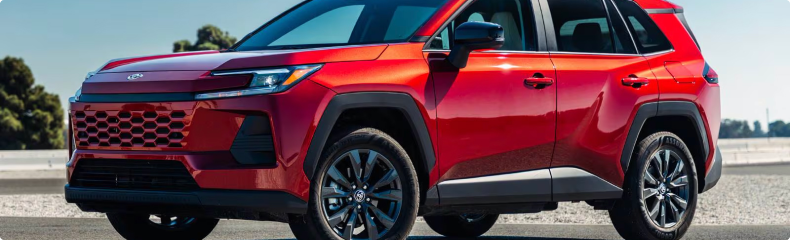
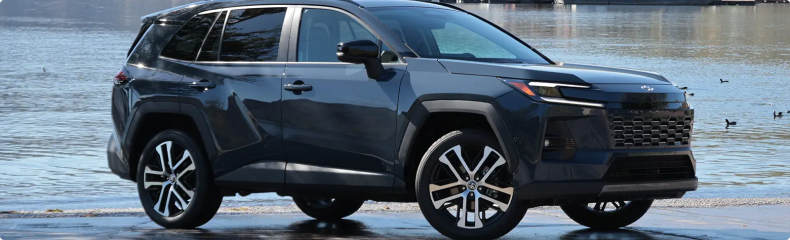
Toyota RAV4 Hybrid 2026

Toyota RAV4 Hybrid (2026)

The 2026 RAV4 launches a new generation. The 6th-generation RAV4 is hybrid-only, with no gas-only powertrain option, and runs Toyota's 5th-generation hybrid system. Output climbs to 226 horsepower FWD and 236 horsepower AWD, both up from the previous generation. Hybrid trims are LE, SE, XLE Premium, Woodland, XSE, and Limited. EPA-estimated fuel economy reaches 48/42/44 mpg city/highway/combined on FWD configurations and 46/40/44 on the LE AWD. The 2026 RAV4 PHEV uses a different powertrain and is sold alongside the standard hybrid.

View New Toyotas at Mike Kelly Toyota
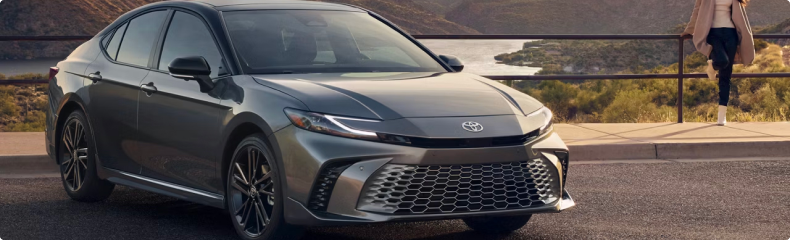
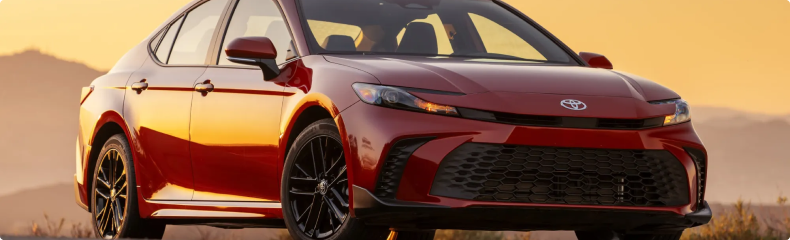
Toyota Camry 2026

Toyota Camry (2026)

The Camry has been hybrid-only since the 2025 redesign. Every 2026 Camry from the LE entry trim through the XSE sport trim uses the 2.5L Dynamic Force Hybrid. The system produces 225 horsepower in FWD configurations and 232 horsepower with the optional Electronic On-Demand AWD. Hybrid trims are LE, SE, Nightshade, XLE, and XSE. The Camry LE FWD posts the highest EPA-estimated fuel economy of any A25A-FXS vehicle: 52/49/51 mpg city/highway/combined. The LE AWD version returns 50/49/50 mpg.

Browse Current Camry Inventory
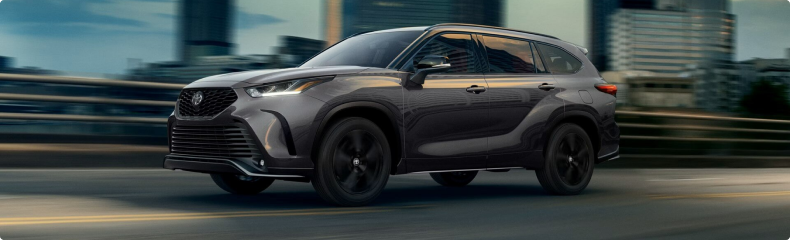
Toyota Highlander Hybrid 2026

Toyota Highlander Hybrid (2026)

The Highlander Hybrid runs the 2.5L Dynamic Force Hybrid in three trims for 2026: XLE, Limited, and Platinum. Output is 243 net combined horsepower. Every 2026 Highlander Hybrid comes standard with Electronic On-Demand AWD, a change for this model year. EPA-estimated fuel economy is 35 mpg combined across the hybrid lineup, and the Highlander Hybrid is rated for up to 3,500 lbs of towing when properly equipped. Seating is for up to seven with second-row captain's chairs, or up to eight on the XLE with the optional bench.

View New Highlander Hybrid and Other Toyotas
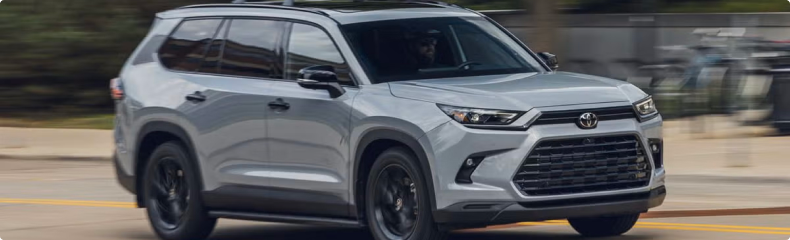
Toyota Grand Highlander Hybrid 2026

Toyota Grand Highlander Hybrid (2026)

The Grand Highlander Hybrid runs the 2.5L Dynamic Force Hybrid in four trims: LE, XLE, Limited, and Nightshade. The system produces 245 net combined horsepower paired with the eCVT. The Grand Highlander Hybrid XLE FWD is the most efficient configuration at 37/34/36 mpg city/highway/combined; AWD versions return 36/32/34 mpg. Tow rating is 3,500 lbs when properly equipped. The Grand Highlander Platinum trim uses Toyota's Hybrid MAX powertrain, not the A25A-FXS.

View Grand Highlander and Other New Toyotas
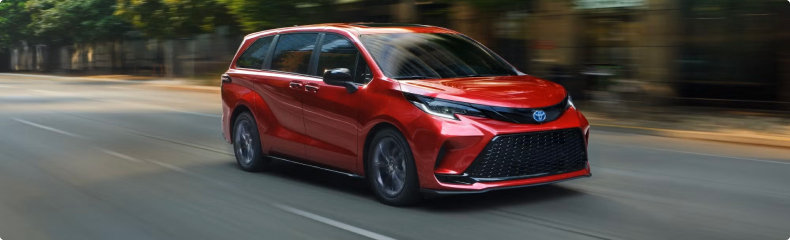
Toyota Sienna 2026

Toyota Sienna (2026)

The Sienna has been sold exclusively as a hybrid since 2021. Every 2026 Sienna trim uses the 2.5L Dynamic Force Hybrid for 245 total system horsepower. EPA-estimated combined fuel economy is 36 mpg on FWD models and 35 mpg on AWD models. Trims are LE, XLE, XSE, Woodland Edition, Limited, and Platinum, with AWD standard on the Woodland Edition and Platinum and optional on the others. Tow capacity is up to 3,500 lbs when properly equipped. Seating is for seven or eight, depending on second-row configuration.

View Sienna and Other New Toyotas
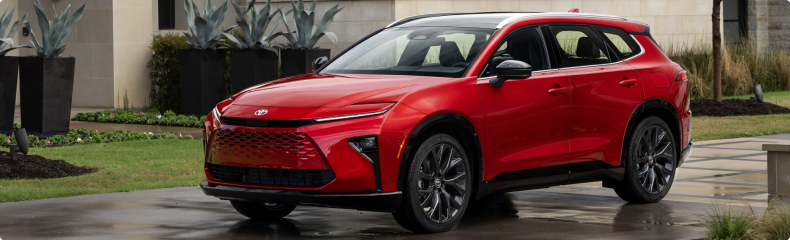
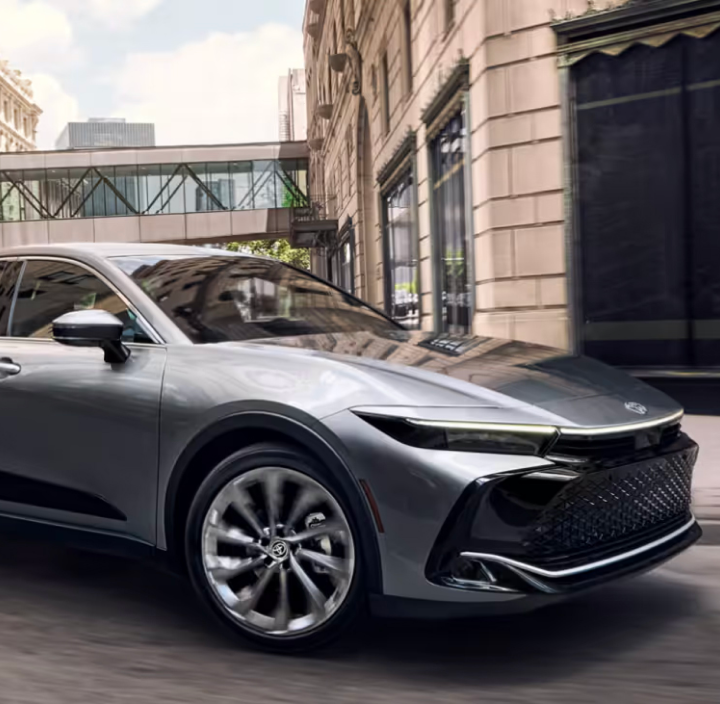
Toyota Crown Signia 2026

Toyota Crown Signia (2026)

The Crown Signia uses the 2.5L Dynamic Force Hybrid across both available trims, XLE and Limited, for 240 net combined horsepower. The engine produces 188 horsepower and 178 lb-ft of torque on its own; the front and rear electric motors add 199 lb-ft and 89 lb-ft of motor torque respectively. AWD is standard on every Crown Signia via the rear motor. EPA-estimated fuel economy is 39/37/38 mpg city/highway/combined. The Crown Signia is rated to tow up to 2,700 lbs when properly equipped.

View Crown Signia and Other New Toyotas
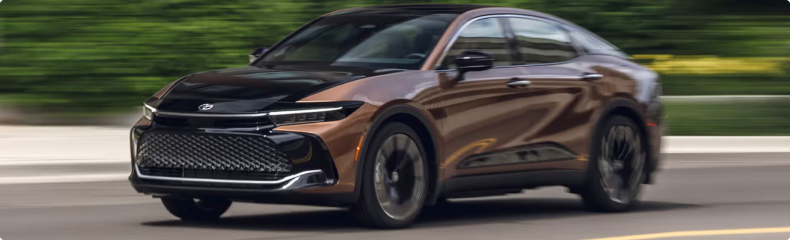
Toyota Crown 2026

Toyota Crown (2026)

The Crown sedan offers the 2.5L Dynamic Force Hybrid on three of its four trims: XLE, Limited, and Nightshade. Output is 236 net combined horsepower, paired with the eCVT and standard Electronic On-Demand AWD. EPA-estimated fuel economy is 41 mpg combined. The Crown XLE/Limited/Nightshade hybrid system uses a Nickel-Metal Hydride battery rather than the Lithium-Ion battery found in the newer Camry and RAV4 implementations. The Crown Platinum trim uses Toyota's Hybrid MAX powertrain, not the A25A-FXS.

View Crown and Other New Toyotas

How the 2.5L Dynamic Force Hybrid Compares

Two comparison points come up for buyers shopping a 2.5L Dynamic Force Hybrid vehicle. The first is the non-hybrid alternative on the Highlander and Grand Highlander, where Toyota offers a 2.4-liter turbocharged gas engine alongside the A25A-FXS hybrid system. The second is the higher-performance Hybrid MAX system, which appears on the Grand Highlander Platinum and Crown Platinum trims. The trade-offs are real and worth understanding before settling on a configuration.

Compared to the Non-Hybrid 2.4L Turbo Gas (Highlander, Grand Highlander)

Spec 2.5L Dynamic Force Hybrid (A25A-FXS) 2.4L Turbo Gas (T24A-FTS)
Vehicles Highlander, Grand Highlander Highlander, Grand Highlander
Horsepower 243 (Highlander) / 245 (Grand Highlander) 265 (both)
Torque 175 lb-ft (Grand Highlander hybrid) 310 lb-ft (both)
Transmission eCVT 8-speed automatic
Max tow (properly equipped) 3,500 lbs 5,000 lbs
Combined MPG 35 (Highlander) / 34-36 (Grand Highlander) 22-24 (both)

The hybrid trades peak power and tow rating for roughly an 11-mpg fuel-economy advantage on the Grand Highlander and about 12-13 mpg on the Highlander. Buyers who tow regularly or value the lower-end torque of a turbocharged engine lean toward the gas version; buyers who prioritize daily-commuting efficiency and the smoothness of an electric assist from a standstill lean toward the hybrid.

Compared to the Hybrid MAX (Grand Highlander Platinum, Crown Platinum)

Toyota offers a second hybrid powertrain in two vehicles that also offer the A25A-FXS in lower trims. The Hybrid MAX system pairs a 2.4-liter turbocharged gas engine with electric motors and a 6-speed automatic transmission, producing 362 horsepower in the Grand Highlander Platinum and 340 horsepower in the Crown Platinum. Both are full-time AWD.

The trade-off is clear. Hybrid MAX delivers substantially more power and a 5,000-lb tow rating on the Grand Highlander Platinum, against the A25A-FXS hybrid's 245 horsepower and 3,500-lb tow rating. Fuel economy drops from 34-36 mpg combined on the regular hybrid to 27 mpg combined on the Hybrid MAX Grand Highlander, and from 41 mpg on the Crown 2.5L hybrid to 30 mpg on the Crown Hybrid MAX. The A25A-FXS is the right choice for efficiency-first buyers; the Hybrid MAX is the right choice for performance-first buyers who still want some electric assist.

Service and Maintenance

Service and Maintenance

The 2.5L Dynamic Force Hybrid needs the same routine engine maintenance as a non-hybrid Toyota: oil changes, filter replacements, fluid checks, and tire rotations on factory-recommended intervals. The hybrid components, including the high-voltage battery, motor-generators, inverter, and hybrid cooling system, are sealed assemblies that do not require routine fluid service the way the engine does, but they are inspected during scheduled visits.

Every new Toyota at Mike Kelly Toyota of Uniontown comes with ToyotaCare, which covers normal factory-scheduled maintenance for 2 years or 25,000 miles, whichever comes first, plus 2 years of unlimited-mileage roadside assistance. ToyotaCare Plus is available as an extension. Hybrid components on every A25A-FXS vehicle carry separate warranty coverage of 8 years or 100,000 miles, and the hybrid battery itself is covered for 10 years or 150,000 miles, whichever comes first. Our factory-trained service technicians handle every Toyota hybrid appointment, from routine oil changes to hybrid-system diagnostics.

Driving in Western Pennsylvania

Driving in Western Pennsylvania

Western Pennsylvania is a fuel-economy region. Long drives between rural towns, highway commutes from Fayette County into Pittsburgh and Morgantown, and a winter season that taxes any vehicle all reward an efficient hybrid powertrain. Drivers in Uniontown, Connellsville, Brownsville, Waynesburg, and the broader region routinely log highway miles where the 35 to 51 mpg combined ratings of the 2.5L Dynamic Force Hybrid lineup translate directly into lower fuel costs, especially against the segment-typical 24 to 28 mpg of comparable gas-only midsize vehicles.

AWD on the Highlander Hybrid, Grand Highlander Hybrid, RAV4 Hybrid, Sienna, Crown, and Crown Signia matters here. The Laurel Highlands snowfall belt around Seven Springs and Hidden Valley can drop upward of 80 inches a year, and elevation changes on Route 40 and Route 119 mean even routine winter commutes from Hopwood to Connellsville or Uniontown to Smithfield put traction to work. The rear electric motor on Toyota's hybrid AWD engages instantly when the front wheels slip, which is useful coming out of a snowy driveway, off a side street, or onto a grade after a stop. For family vehicles like the Sienna minivan and the two Highlanders, that immediate traction response matters as much as the fuel economy.

Frequently Asked Questions About the 2.5L Dynamic Force Hybrid

What is the Toyota 2.5L Dynamic Force Hybrid?

The 2.5L Dynamic Force Hybrid (engine code A25A-FXS) is a 2.5-liter Atkinson-cycle 4-cylinder gas engine paired with one or two electric motor-generators and an electronic continuously variable transmission. It is the most widely used hybrid powertrain in Toyota's current lineup, powering the 2026 Camry, RAV4 Hybrid, Highlander Hybrid, Grand Highlander Hybrid, Sienna, Crown, and Crown Signia. Net combined horsepower varies by vehicle, from 225 in the Camry FWD up to 245 in the Sienna and Grand Highlander.

Does the 2.5L Dynamic Force Hybrid need to be plugged in?

No. Every vehicle that uses the A25A-FXS is a standard hybrid, not a plug-in. The battery charges through the gas engine and through regenerative braking during normal driving. There is no charge port. Toyota does offer a plug-in version of the RAV4, the RAV4 PHEV, but that vehicle uses a different powertrain, not the A25A-FXS.

Should I get the Hybrid or the gas version of my Toyota?

If your Toyota is offered in both hybrid and gas form, Highlander and Grand Highlander in 2026, the hybrid gives you a 10 to 13 mpg combined fuel-economy advantage and a smoother low-speed driving feel, in exchange for lower peak horsepower and a 1,500-lb reduction in tow rating. The gas version is the right pick for buyers who tow regularly or prioritize raw output. The hybrid is the right pick for buyers who prioritize fuel economy and daily-driving smoothness. The Camry, RAV4, Sienna, Crown XLE/Limited/Nightshade, and Crown Signia are hybrid-only in 2026, so the choice does not apply to those vehicles.

How is the 2.5L Dynamic Force Hybrid different from the Hybrid MAX?

Hybrid MAX uses a 2.4-liter turbocharged engine paired with electric motors and a 6-speed automatic transmission, producing 340 to 362 horsepower depending on the vehicle. The 2.5L Dynamic Force Hybrid uses a naturally aspirated 2.5-liter engine and an eCVT, producing 225 to 245 horsepower. Hybrid MAX prioritizes performance and tow rating; the 2.5L Dynamic Force Hybrid prioritizes efficiency. On the Grand Highlander and Crown, both are available on different trims, so buyers can pick their priority.

How is it different from the truck-hybrid i-FORCE MAX?

Different architecture for different uses. The i-FORCE MAX system in the Tundra, Sequoia, Tacoma, 4Runner, and Land Cruiser uses a parallel-hybrid setup with a conventional automatic transmission built to support full-size truck and body-on-frame SUV duty. The 2.5L Dynamic Force Hybrid uses a power-split parallel-series architecture with an eCVT, built for passenger cars and unibody crossovers where fuel economy and smoothness matter more than peak tow rating.

How long does the hybrid battery last?

Toyota's hybrid battery warranty on every 2026 vehicle using the A25A-FXS is 10 years or 150,000 miles, whichever comes first. The other hybrid components, including motor-generators, inverter, and hybrid control unit, are covered for 8 years or 100,000 miles. Toyota's hybrid batteries have a long track record going back to the original Prius in 2000; many units continue to function past the warranty period in normal use.

How does the AWD work on hybrid vehicles?

Toyota's Electronic On-Demand AWD uses a dedicated electric motor on the rear axle rather than a mechanical driveshaft running between the front and rear axles. When the system detects wheel slip or hard acceleration, the rear motor engages instantly; when it is not needed, the motor disengages to save fuel. There is no center differential and no mechanical link between front and rear, so the system is lighter and simpler than a conventional AWD setup. AWD is standard on every Crown, Crown Signia, and 2026 Highlander Hybrid, and optional on the Camry, RAV4 Hybrid, Sienna, and Grand Highlander Hybrid.

Can the 2.5L Dynamic Force Hybrid run on electric power alone?

Briefly. The system has an EV mode that can run on electric power alone for short stretches at low speeds, such as creeping through a parking lot or pulling away from a stop, before the gas engine engages. It is not designed for sustained electric-only driving the way a plug-in hybrid or full electric vehicle is. The electric motors and gas engine work together during normal driving; the system decides moment to moment which combination is most efficient.

Find a Toyota with the 2.5L Dynamic Force Hybrid

Find a Toyota with the 2.5L Dynamic Force Hybrid

The 2.5L Dynamic Force Hybrid is the most widely available hybrid powertrain in the 2026 Toyota lineup. Camry, RAV4 Hybrid, Highlander Hybrid, Grand Highlander Hybrid, Sienna, Crown Signia, and Crown XLE/Limited/Nightshade all use the A25A-FXS. Inventory rotates, and current trim, color, and configuration options are visible in the live inventory listings.